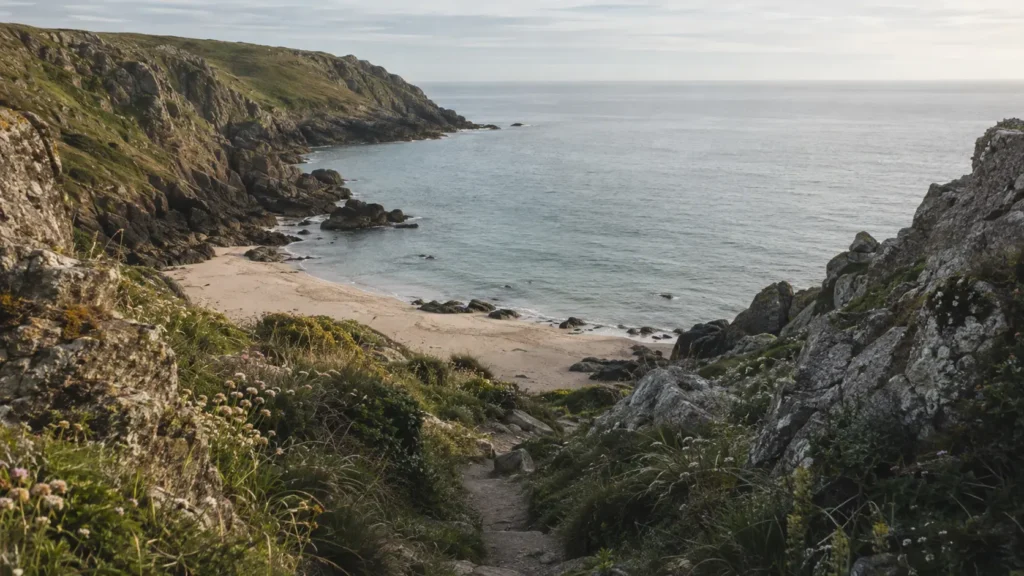
Cornwall's quieter beaches reward a little planning. Some are reached on foot, some change dramatically with the tide and even famous coves can feel peaceful outside the busiest hours.
This guide focuses on the experience of finding a calmer beach day while being honest about access, facilities and the fact that beautiful places are not always secret.
Before choosing a cove, read the RNLI’s tide and tidal cut-off guidance and check the conditions for that beach. For accommodation, compare our Cornwall cottage bases and plan a realistic journey rather than assuming a quieter beach is close to every property.
Secluded Beaches in Cornwall: Quiet Coves and Coastal Tips
Kynance Cove
Dramatic rock formations and tidal scenery; popular in peak periods.
Porthcurno
Pale sand below steep cliffs, with major attractions nearby.
Cornwall Coast-Path Coves
Smaller beaches where the walk is part of the experience.
Rock pools and inlets
A changing landscape that calls for careful timing.
Quieter Cornwall beaches and coastal coves
Use these ideas as a starting point, then confirm current access, opening and safety information before travelling.
Kynance Cove
Kynance is not a hidden secret, yet its approach, rock stacks and tidal character create the atmosphere people seek from a secluded cove. Visit outside peak hours where practical and allow time for the walk and changing conditions.
- Check National Trust access and parking information.
- Visit with the tide in mind.
- Expect it to be busy on fine summer days.
Porthcurno
Porthcurno combines pale sand and clear water with a dramatic granite setting. It can be included in a wider day with clifftop views or nearby cultural attractions, but its popularity means early planning helps.
- Review access and facilities before travel.
- Keep away from cliff edges and unstable ground.
- Allow more time than a simple beach stop.
Coves reached from the coast path
Some of the most rewarding beach moments arrive during a walk: a small inlet below the path, a view that opens around a headland or a quiet place to pause. Choose an established route and understand how you will return before heading down.
- Use mapped paths and reliable route information.
- Wear footwear suited to uneven ground.
- Tell someone your plan on longer or remote walks.
Tidal coves and rock pools
At lower water, sandy channels and rock pools may appear where there was little visible beach earlier. This can make a familiar cove feel entirely different, but it also creates a risk of being cut off.
- Check tide times from a reliable source.
- Leave a generous margin for the return.
- Supervise children around water and slippery rocks.
Plan a visit to Cornwall’s quieter beaches
Bring
Water, food, layers and suitable footwear when facilities may be limited.
Leave
Only footprints: take rubbish home and protect dunes and wildlife.
Change plans
If parking, access, weather or the tide makes the original choice unsuitable.
Before visiting secluded Cornwall coves
Are there truly hidden beaches in Cornwall?
There are quieter coves, but publicising fragile places can increase pressure and some access routes are unsafe. Established beaches visited at quieter times are often the responsible choice.
When are Cornwall beaches quietest?
Weekdays, earlier mornings and the shoulder seasons are often calmer, although weather, tides and local events all affect visitor numbers.
What should I check before visiting a secluded beach?
Check tide times, weather, access difficulty, parking and facilities. Make sure the route suits everyone in your group.
Can I swim at a remote beach?
Conditions vary and many smaller beaches have no lifeguard cover. Follow local safety information and choose a lifeguarded beach if you are unsure.
More Driftwood guides
Slow the holiday down
Choose a comfortable Cornwall base for coast-path walks, unhurried beach days and quieter evenings.
Explore Driftwood Holiday Cottages